Shenzhen's Hardware Giants Enter Automated Nail Tech: Sourcing Insights for 2026
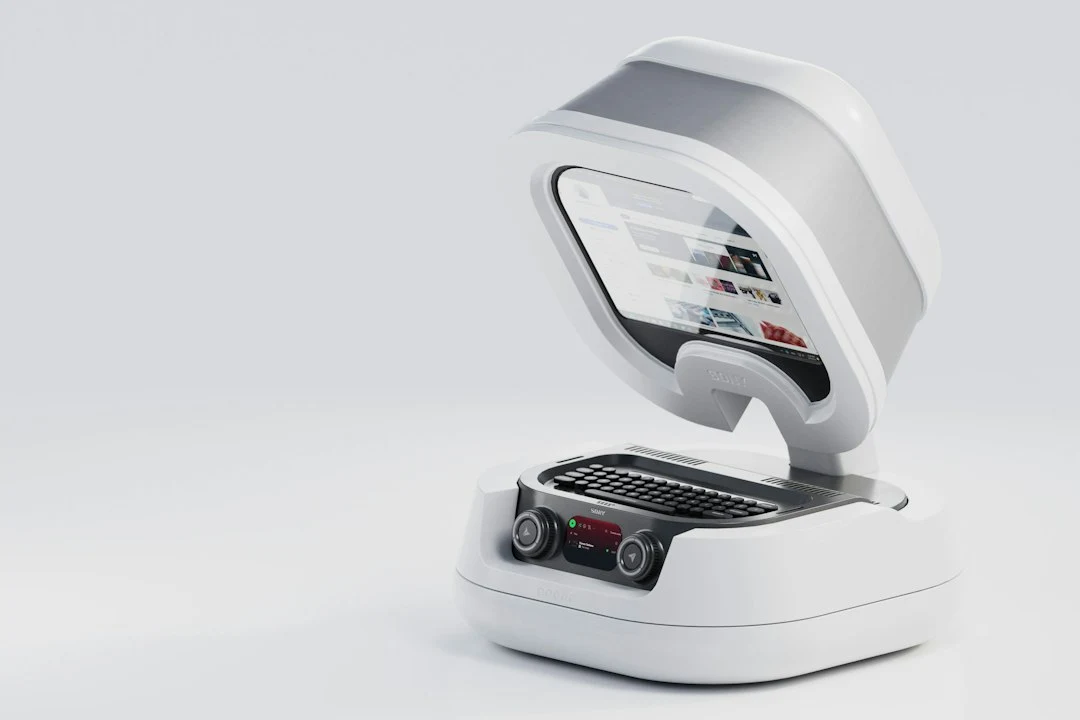
Top Chinese hardware innovators from DJI and Anker are launching automated nail printing devices, challenging US incumbent 10Beauty. This article analyzes the supply chain shift in Shenzhen, highlighting how established manufacturing ecosystems enable rapid scaling of smart beauty tech. Importers can leverage these new OEM capabilities for cost-effective, high-tech retail solutions targeting the booming North American beauty market.
Market Disruption: The Convergence of Consumer Hardware and Beauty Tech
The global beauty industry is undergoing a structural shift, moving from labor-intensive manual services to automated, hardware-driven solutions. For international buyers and brand owners, this represents a significant opportunity to source next-generation consumer electronics that intersect with the high-margin beauty sector. The emergence of automated nail technology in Shenzhen signals a broader trend where established hardware giants are leveraging their supply chain dominance to disrupt traditional service industries.
In late 2025, the U.S. market witnessed a pivotal moment with the introduction of 10Beauty, an automated nail printing robot. This device reduced service time from 60 minutes (manual) to 25–45 minutes (automated) while lowering the price point from approximately $50 to $30. Following this validation, 10Beauty secured $23.5 million in new funding, bringing its total capitalization to $70 million. This success has triggered a wave of innovation from China’s top-tier tech ecosystem.
- Key Player Entry: In early 2026, a team comprising former executives from DJI, Insta360, and Anker founded Yuanqi Shuchen, launching their first generation of automatic nail printing devices immediately after securing angel investment.
- Talent Migration: Former Huawei smart office hardware lead Cheng Haiyu and former DJI扫地机 (robot vacuum) business head Liu Ang have entered the smart nail sector. Cheng’s company, Ji Yin Technology, completed its angel round in September 2026.
- Strategic Implication: High-level engineers from Shenzhen’s consumer hardware giants are cross-pollinating into niche beauty applications, indicating that the manufacturing capability for these devices is mature and scalable.
Supply Chain Analysis: Why Shenzhen?
For procurement professionals, understanding the geographic concentration of this innovation is critical. Shenzhen is not merely an assembly hub; it is the global epicenter for rapid prototyping, precision machining, and embedded software integration required for beauty tech.
The Labor Arbitrage and Service Gap
The primary driver for automation in the U.S. beauty sector is a severe supply-demand imbalance. According to Global Market Insights (GMI), the North American nail salon market was valued at $16.2 billion in 2025, with the U.S. accounting for $14.3 billion (88.3% of the regional total). However, the supply side remains fragmented:
- Fragmented Supply Base: As of 2019, there were approximately 27,963 employee-owned nail salons in the U.S., each generating an average annual revenue of $287,000.
- Labor Shortage: The majority of operators are self-employed or small business owners facing chronic staffing shortages and rising wage pressures.
- Efficiency Ceiling: Manual processes hit a physical efficiency limit, creating a clear value proposition for machines that can standardize quality and speed.
This gap allows Chinese manufacturers to export not just hardware, but a "service-in-a-box" solution. Buyers should note that the competitive advantage lies in Shenzhen’s ability to iterate hardware designs weeks faster than Western counterparts, allowing brands to capture market share before competitors react.
Quality Control & Manufacturing Standards: A Buyer’s Checklist
As you evaluate OEM/ODM partners in Shenzhen for beauty tech products, standard consumer electronics QC protocols must be adapted for medical-grade hygiene and cosmetic precision. The following checklist outlines critical control points for sourcing automated nail devices.
1. Precision Engineering and Tolerance Control
Automated nail printers require micron-level accuracy in nozzle alignment and robotic arm movement. Defects here result in smudged prints or mechanical failure.
- Critical Parameter: Verify that suppliers use CNC-machined aluminum or stainless steel components for the print head assembly, rather than injection-molded plastic, to ensure thermal stability and dimensional accuracy.
- Inspection Point: Conduct First Article Inspection (FAI) focusing on the repeatability of the printing matrix. Require a tolerance check of ±0.05mm on key mounting surfaces.
2. Hygiene and Material Safety Compliance
Unlike standard electronics, these devices come into direct contact with human keratin and biological fluids. Regulatory compliance is non-negotiable for US/EU markets.
- Material Certification: All parts touching the user or nails must provide FDA-compliant biocompatibility reports (ISO 10993) and RoHS/REACH compliance certificates.
- Surface Treatment: Inspect for anti-bacterial coatings or smooth, non-porous finishes that prevent bacterial buildup. Request evidence of cleaning cycle validation tests.
3. Software Stability and User Experience (UX)
The hardware is only as good as the algorithm controlling it. Suppliers must demonstrate robust error-handling logic.
- Stress Testing: Require proof of continuous operation testing (e.g., 500+ consecutive cycles without jamming or calibration drift).
- Calibration Protocol: Ensure the device has an automated self-calibration routine upon startup to account for environmental temperature/humidity variations.
Strategic Sourcing Recommendations for 2026
To mitigate risks and maximize ROI when partnering with Shenzhen-based beauty tech manufacturers, adopt the following strategic framework:
| Risk Area | Mitigation Strategy | Actionable Step |
|---|---|---|
| IP Protection | High risk due to rapid iteration culture. | Sign strict NDAs and NNN agreements. Keep core firmware updates separate from hardware manufacturing contracts. |
| After-Sales Support | Complex devices require technical maintenance. | Negotiate a local spare parts inventory agreement or train your internal technical team on modular replacement procedures. |
| Regulatory Hurdles | FDA/CE certification delays. | Engage third-party testing labs (e.g., SGS, Intertek) during the prototype phase, not just before mass production. |
VettedChina advises buyers to prioritize factories with proven experience in both consumer electronics and medical-grade hygiene standards. The convergence of AI, robotics, and beauty is no longer experimental—it is a ready-to-scale supply chain opportunity for those who vet their partners rigorously.
Dispatch a Certified Quality Auditor to Your Factory for $199
Same-day dispatch across Guangdong, Zhejiang, and Jiangsu. Full 35-page PDF report with 60+ photos delivered within 24 hours.