Shenzhen Sourcing Insight: How Integrated Design Drives High-Margin Sales in the US Cable Market
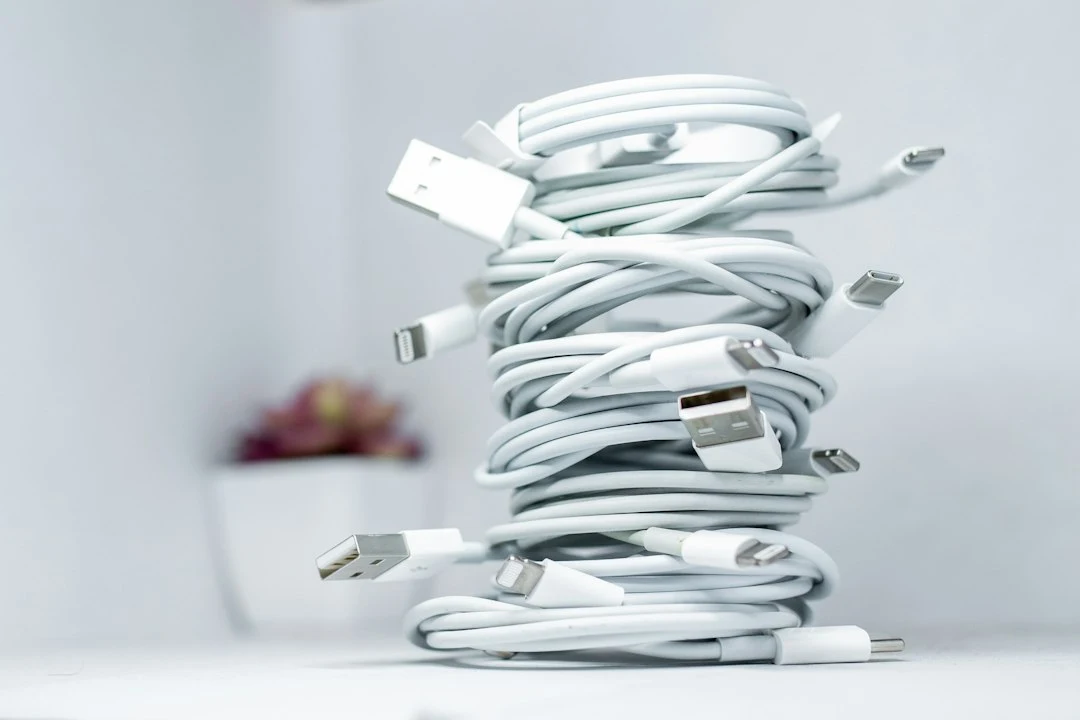
This case study analyzes a Shenzhen manufacturer’s successful entry into the US market via TikTok Shop. By combining charging cables with integrated phone stands, the company leveraged manufacturing 'generational gaps' to command premium pricing ($16.66 vs $4). Importers gain insights into identifying high-potential niche accessories and optimizing content-driven sales channels from Chinese OEMs.
The "Experience Gap": Why Integrated Design Commands Premium Margins in the US Consumer Electronics Market
In the high-stakes arena of cross-border e-commerce, the most lucrative opportunities often lie not in discovering new products, but in recontextualizing existing ones. A recent case study from Shenzhen illustrates a powerful trend: Chinese manufacturers are bypassing traditional price wars by leveraging integrated design solutions that solve specific user pain points, thereby creating an "experience gap" between domestic saturation and overseas demand.
This phenomenon is best exemplified by Basemo (Shenzhen Beimo Technology), a manufacturer that recently achieved viral success on TikTok Shop in the United States. By transforming a standard USB-C cable into a multifunctional tool with an integrated phone stand, they increased their unit price from approximately $4 USD domestically to nearly $17 USD in the US market—a margin expansion driven purely by perceived value and functional innovation, not material cost.
- The Core Insight: Domestic Chinese markets are characterized by hyper-competition and feature parity. However, features considered "standard" or "minor optimizations" in China can represent significant "consumption upgrades" for Western buyers who are accustomed to fragmented, single-function accessories.
- The Strategic Shift: Successful sourcing is no longer about finding the cheapest OEM; it is about identifying factories capable of product integration—combining two categories (e.g., charging + support) into one SKU to justify premium pricing.
Sourcing Strategy: Leveraging Content Commerce Over Traditional Shelf Retail
For global brand buyers and importers, the channel strategy is as critical as the product itself. The Basemo case highlights a decisive shift away from search-based platforms (like Amazon) toward discovery-based commerce (like TikTok Shop). This distinction fundamentally changes how a product must be engineered and sourced.
Why Discovery Commerce Favors Integrated Design
On traditional shelf-based platforms, consumers actively search for "USB-C Cable." The decision matrix is dominated by technical specifications (wattage, length, connector type) and price. In this environment, differentiation is difficult, leading to race-to-the-bottom pricing.
Conversely, discovery-based platforms utilize algorithmic feeds that push products to users based on visual engagement rather than explicit intent. Here, the product’s ability to demonstrate a solution visually becomes its primary selling point.
- Visual Proof of Value: A standard cable cannot demonstrate its superiority in a 15-second video. However, a cable with a rotating zinc-alloy hinge that doubles as a phone stand offers immediate, tangible utility. It turns a passive accessory into an active tool.
- Reduced Cognitive Load: By combining a charger and a stand, the product solves two problems with one purchase. For the Western consumer, this simplifies the buying journey and reduces the need to purchase separate, lower-quality accessories.
- Algorithmic Favorability: Products that generate high watch-time through demonstration (showing the stand mechanism in action) trigger higher algorithmic distribution, reducing customer acquisition costs compared to static image listings.
Manufacturing Realities: Engineering for Differentiation in Shenzhen
Behind every high-margin viral product is a supply chain capable of rapid iteration and precise engineering. The Basemo cable’s success was not accidental; it was the result of a mature manufacturing ecosystem in Shenzhen’s Longhua district, where R&D cycles are measured in weeks, not months.
The Anatomy of a High-Margin SKU
The product in question featured several key engineering elements that distinguish it from commodity cables:
- Mechanical Integration: The inclusion of a 360-degree rotating zinc alloy hinge requires precision molding and assembly capabilities that go beyond simple wire stripping and crimping.
- Durability Enhancements: To withstand the mechanical stress of repeated folding and unfolding, the cable utilizes reinforced nylon braiding and metal-gusseted connectors, addressing common failure points in cheaper competitors.
- Standardized Performance: Despite the added complexity, the core electrical performance remains industry-standard (240W fast charging, dual Type-C ports), ensuring reliability while adding aesthetic and functional value.
Implication for Buyers: When sourcing from Chinese manufacturers, prioritize partners who possess in-house industrial design teams rather than pure contract manufacturers. These partners can translate your market insights into physical prototypes quickly, allowing you to test "integrated" concepts before committing to large-scale production runs.
Quality Control & Risk Mitigation: Ensuring Integrity in Complex Assemblies
As products become more mechanically complex, the risk of quality defects increases. A simple cable has few points of failure; a cable with a moving hinge has many. For importers, this necessitates a rigorous Quality Assurance (QA) protocol that goes beyond basic electrical testing.
Key QC Checkpoints for Integrated Accessories
- Mechanical Stress Testing: Verify the durability of the hinge mechanism. Conduct cycle tests (e.g., opening and closing the stand 1,000 times) to ensure the zinc alloy does not fatigue or break under normal usage conditions.
- Stability Verification: Ensure the stand functions correctly with various device weights and sizes. A loose fit or wobbly base will lead to high return rates and negative reviews, destroying brand reputation.
- Aesthetic Consistency: With premium pricing comes heightened scrutiny on finish quality. Inspect for mold lines, surface scratches, and color consistency across the batch. Any deviation from the approved sample should be rejected.
- Packaging Integrity: Complex products require protective packaging to prevent damage during shipping. Ensure that the internal packaging secures the movable parts so they do not shift or break during transit.
Implementing AQL Standards
Adopt strict Acceptable Quality Limit (AQL) standards tailored to the product’s complexity. For a product with both electronic and mechanical components, consider using a stricter sampling level (e.g., Level II or III) compared to simple commodities. Focus inspection efforts on the critical-to-quality attributes: the functionality of the hinge and the integrity of the electrical connections.
Actionable Advice for Global Importers
To replicate this success, buyers must shift their mindset from "buying products" to "buying solutions." Here is how to operationalize this approach:
1. Identify "Feature Gaps" in Your Target Market
Analyze top-selling items in your category on Western platforms. Look for complaints in reviews regarding inconvenience, lack of versatility, or poor ergonomics. These pain points represent opportunities for integrated design. If customers complain that their charging cable tangles, source a magnetic or coiled solution. If they complain about holding their phone while watching videos, source a cable with an integrated stand.
2. Validate Through Content Before Scaling
Before placing large orders, collaborate with your supplier to create demo content. Test the product’s "demonstrability" on social media platforms. If the product’s value cannot be clearly communicated in a short-form video, it may struggle in discovery-based channels. Use small initial batches to test marketing angles and refine the product design based on user feedback.
3. Partner for Innovation, Not Just Production
Seek out suppliers who invest in R&D and hold patents for novel designs. These partners are more likely to offer exclusive products that protect your margins from copycats. Build long-term relationships with these innovators to gain early access to new technologies and design trends.
4. Prioritize Transparency and Compliance
Ensure all products meet US safety standards (FCC, UL, etc.). For products with moving parts, verify that materials are non-toxic and durable. Transparent communication with your supplier regarding quality expectations is crucial. Provide detailed inspection checklists and conduct pre-shipment inspections to catch issues before goods leave China.
Conclusion
The success of Basemo’s integrated cable demonstrates that the future of high-margin sourcing lies in value-added design. By bridging the "experience gap" between saturated domestic markets and evolving overseas demands, Chinese manufacturers are delivering products that resonate deeply with Western consumers. For global buyers, the key to unlocking these margins is to source intelligently, validate rigorously, and partner with innovators who understand that in today’s market, functionality is king, but experience is queen.
Dispatch a Certified Quality Auditor to Your Factory for $199
Same-day dispatch across Guangdong, Zhejiang, and Jiangsu. Full 35-page PDF report with 60+ photos delivered within 24 hours.